

 See My Latest Article on HelloNation

After a strong storm, roof damage is not always obvious from the ground. Wind, hail, heavy rain, lightning, and flying debris can create problems that appear immediately—or only become visible after the next rainfall.
In Catalina Foothills, AZ, summer monsoon storms can bring intense wind gusts, blowing dust, hail, heavy downpours, and lightning. A safe inspection should begin from the ground and continue indoors before anyone considers accessing the roof.
Is it safe to inspect the roof right after a storm?
No. Wait until the storm has completely passed, lightning is no longer nearby, and surfaces are dry enough to evaluate safely. Never climb onto a wet, damaged, or debris-covered roof.
Roof access is especially dangerous after wind or hail because shingles may be loose, roof edges may be unstable, and hidden structural damage may not be visible. Downed power lines, damaged electrical equipment, broken branches, and slippery surfaces create additional hazards.
Start with these precautions:
- Stay indoors while thunder or lightning is present.
- Keep away from sagging ceilings, damaged walls, and areas with active leaks.
- Do not touch fallen wires or metal objects that may be energized.
- Keep children and pets away from roof debris and standing water.
- Use a flashlight rather than an open flame if water has entered near electrical fixtures.
If the building appears unstable, leave the area and contact emergency services when necessary. A roof inspection can wait until the property is safe.
What can be checked from the ground?
A ground-level inspection can reveal many common forms of storm damage without putting anyone on the roof. Walk around the property and look at the roofline from several angles.
Check for:
- Shingles on the ground, in landscaping, or near drainage areas
- Sections of roof that look uneven, lifted, curled, or displaced
- Exposed underlayment, roof decking, or fasteners
- Missing metal flashing around roof edges, walls, vents, and chimneys
- Damaged vent covers or torn seals around plumbing vents
- Dented metal components, gutters, downspouts, and air-conditioning equipment
- Broken branches or other objects resting on the roof
- Gutters that have pulled away from the fascia
- New cracks, gaps, or visible openings along roof edges
Look at nearby trees as well. A branch may strike the roof without leaving a large hole, while still damaging shingles, flashing, or the roof deck below.
Do not assume that a roof is undamaged simply because no shingles are visible on the ground. Wind can loosen materials without removing them entirely.
How do you check for leaks inside the house?
Inspect the attic and upper ceilings as soon as it is safe, then check again after the next rainfall. Water may enter through a small roof opening and travel along rafters before appearing in another location.
Inside the home, look for:
- Brown, yellow, or gray ceiling stains
- Damp drywall or soft spots
- Peeling paint or bubbling drywall
- Wet insulation
- Drips around ceiling fixtures, vents, or skylights
- Musty odors that develop after the storm
- Water collecting in the attic or along roof framing
- Light visible through the roof deck during daylight
A ceiling stain does not always identify the exact location of the roof problem. Water can travel horizontally before it becomes visible, so the interior mark may be several feet away from the exterior damage.
If water is near a light fixture, outlet, appliance, or electrical panel, avoid touching the area. Turn off power only if the electrical shutoff can be reached safely without entering water or standing on a wet surface.
What does hail damage look like?
Hail damage may be difficult to identify from the ground, especially on older or weathered roofing. On asphalt shingles, possible signs include small dark marks, exposed fiberglass mat, missing granules, or areas that appear bruised or irregular.
Also inspect metal surfaces for dents, including:
- Gutters and downspouts
- Roof vents
- Flashing
- Window screens
- Patio covers
- Air-conditioning equipment
- Painted outdoor surfaces
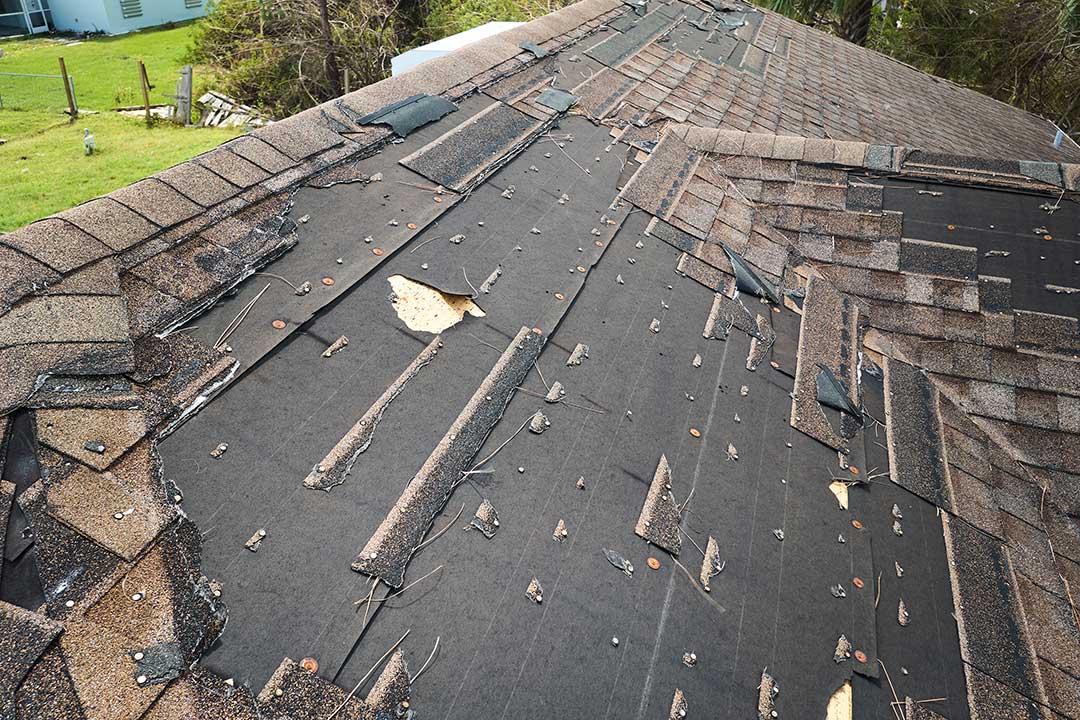
Small hail can still cause damage when driven by powerful wind. However, not every dark mark or granule loss is storm damage. Normal aging, foot traffic, falling seed pods, and long-term sun exposure can create similar appearances.
Photographs taken from the ground can help document what was visible immediately after the storm. Include wide photos showing the entire roof slope and closer photos of damaged areas.
What wind damage should residents look for?
Wind damage often affects roof edges, corners, ridges, and areas around penetrations. These locations experience increased wind pressure and may lift before the middle of a roof slope does.
Look for shingles that are:
- Lifted at the edges
- Folded or creased
- Missing granules along a fresh crease
- Partially detached
- Shifted out of alignment
- Missing from a visible section
Also check flashing around walls, vents, skylights, and other roof openings. A small gap in flashing may allow water to enter even when the surrounding shingles look normal.
Strong winds can damage more than the roof surface. Inspect fascia boards, soffits, gutters, roof-mounted equipment, shade structures, and nearby fences for signs of movement or impact.
What should be done if water is entering the home?
First, protect people and belongings without creating a new hazard. Place containers under active drips, move furniture away from the affected area, and cover belongings with plastic if doing so is safe.
Avoid cutting into a bulging ceiling unless there is an immediate danger of collapse and the area can be approached safely. A water-filled ceiling may be heavier than it appears.
Temporary protection may be necessary if another storm is approaching, but roof access should not be attempted by an untrained person. A tarp placed incorrectly can cause falls, worsen damage, or become airborne in strong wind. Any emergency action should be documented with photos, dates, and receipts.
How should storm damage be documented?
Create a simple record before disturbing damaged materials whenever possible. Include:
- The date and approximate time of the storm
- Weather conditions noticed, such as hail, strong wind, or heavy rain
- Exterior photos from multiple sides of the house
- Interior photos of stains, leaks, or damaged finishes
- Photos of fallen branches, debris, or displaced materials
- A written description of when each problem was first noticed
Do not discard damaged roofing materials until the condition has been documented and any required inspection has taken place. Review the property insurance policy for reporting requirements, deductibles, temporary repair rules, and exclusions. Coverage can depend on the cause of damage and the policy language.
When is a professional inspection necessary?
An inspection is warranted when the roof has visible damage, the home has an unexplained leak, materials are missing, a tree or large branch struck the structure, or the roofline appears uneven or sagging.
Professional evaluation is also appropriate when damage is suspected but cannot be safely confirmed from the ground. Roof problems may involve underlayment, flashing, decking, ventilation components, or structural connections that are not visible during a casual inspection.
The safest approach is to document what can be seen without climbing, control interior water exposure, and avoid temporary repairs that put anyone at risk. In this desert climate, a roof may dry quickly after a storm while hidden moisture remains in insulation, drywall, or wood framing, so interior areas should be checked again over the following days.